No one ever hopes to be sick, but some Americans have found themselves using a fake illness to avoid plans or things they simply didn’t want to do. From lunch plans that you’re no longer in the mood for to the family reunion you’ve been dreading, people avoid a variety of activities and events by using the excuse of being “sick” to stay home or take advantage of alternate plans. Sometimes you just want to relax and play a game of sudoku, right?
At Sudoku Bliss, we know how hard it can be to put down your favorite game and show up to events you’re no longer interested in. That’s why we set out to learn where Americans are most guilty of this habit.
To do this, we surveyed residents in 40 of the largest U.S. cities and asked how often they pretend to be sick in order to avoid plans, what activities they’ve done this for, why they fake an illness, and more. We then used these responses to create a faking-sick score and ranked cities accordingly. Read on to see where Americans are most likely to fake being sick to get out of things.
Key Takeaways
- 86% of Americans admit they have pretended to be sick to avoid plans.
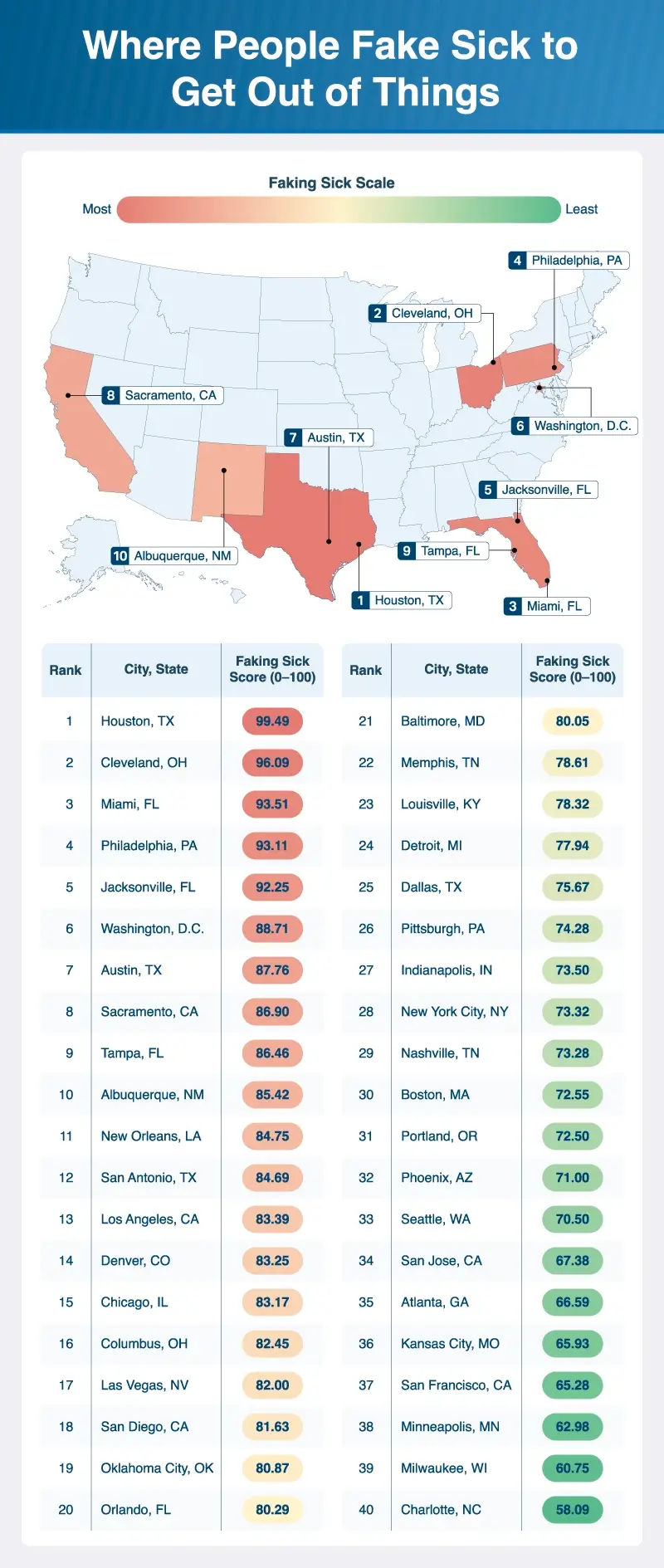
- Houston, TX, Cleveland, OH, and Miami, FL, residents are the most likely to fake being sick to get out of things.
- Monday and Friday are the most likely days Americans will fake being sick to get out of things.
- More than two-fifths of parents say they have pretended their child was sick to get out of something.
- Nearly 2 in 5 Americans say they sometimes feel guilty after faking being sick to get out of something.
- A third of Americans who fake being sick worry their friends will stop inviting them to do things.
Cities Where Americans Fake Being Sick Most and Least
If you have ever told a little white lie about being sick to get out doing something, you’re not alone because we learned that 86% of Americans admit to doing the same. While the concept of faking sick is common, we wanted to find out if it’s more popular in certain parts of the country.
Leading the way with a faking-sick score of 99.49 out of 100 is Houston, TX, where 96% of residents say they have pretended to be sick to get out of doing something. While a majority of people admit to doing this, nearly 1 in 4 Houston residents say they have felt guilty after faking an illness.
Coming in second place is Cleveland, OH, with a score of 96.09 out of 100. Although many people’s faked sicknesses only last one day, others use the excuse multiple days in a row. We discovered that Cleveland residents are most guilty of this with 61% of people reporting they have pretended to be sick two or more days in a row.
Up next is Miami, FL, claiming third place as the city’s residents are most likely to have faked being sick three or more times in the past year. Additionally, when asking about specific activities people have faked an illness to avoid, we discovered Miami residents are most likely to have pretended to be sick to get out of childcare or parenting duties (15%) and personal appointments (25%).
While Miami residents are most likely to fake an illness to get out of caring for a child, we found that more than two-fifths of parents across the country say they have pretended their child was sick to get out of something. For 1 in 5 parents, this included exaggerating how sick their child actually was, but 23% say their child wasn’t sick at all.
When asking about when Americans are most likely to fake being sick, we found more than two-fifths are equally as likely to do it on any given day. For 1 in 4 people, however, these white lies are most common on Mondays, while 21% of people say they are most likely to fake being sick on Fridays.
Activities People Avoid and How They Spend Their New Free Time
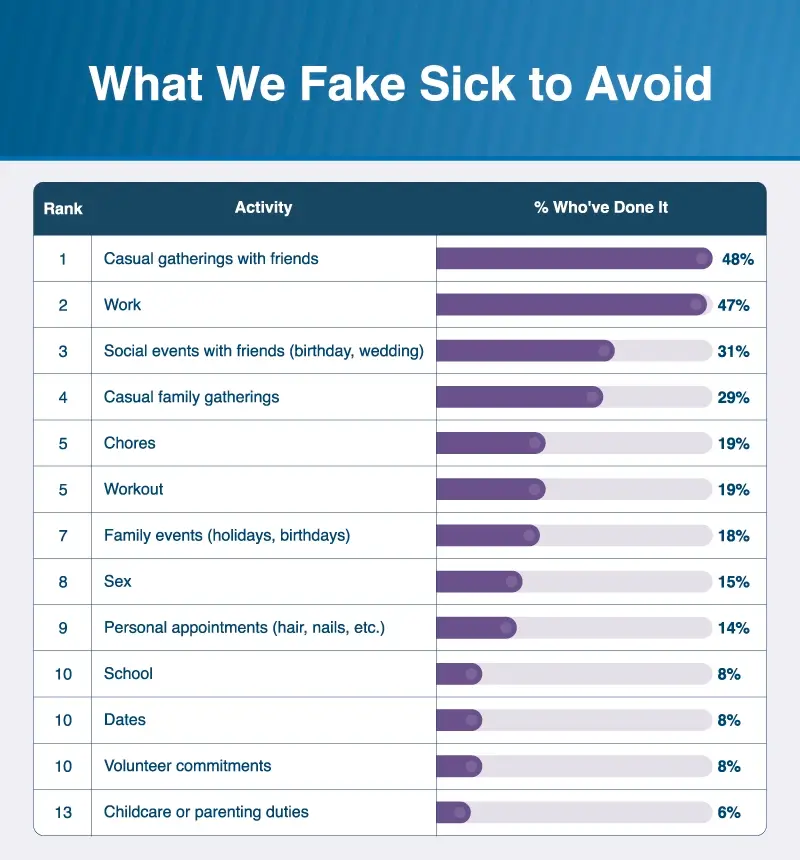
So with more than half of the country admitting to faking illness to avoid certain things, we wanted to learn which types of activities are most likely to elicit an excuse. Leading the way with nearly half (48%) of Americans admitting to it are casual gatherings with friends. From a morning brunch to a later movie, we plan many activities with friends that sound great at the time. Unfortunately, for some, those plans sound less exciting when it’s time to leave the house and meet up.
Coming in second place is work as 47% of people say they have faked being sick to avoid clocking in. This is followed by social events with friends like birthdays or weddings, which a third of Americans say they have pretended they were sick to avoid.
Next up, claiming fourth place are casual family gatherings, which 29% of Americans admit to. While time with friends and family can be exciting and at times relaxing, some people simply need to cancel plans to have time to themselves. Wrapping up the top five activities is a tie for fifth place as nearly 1 in 5 people admit to faking being sick to get out of chores and workouts.
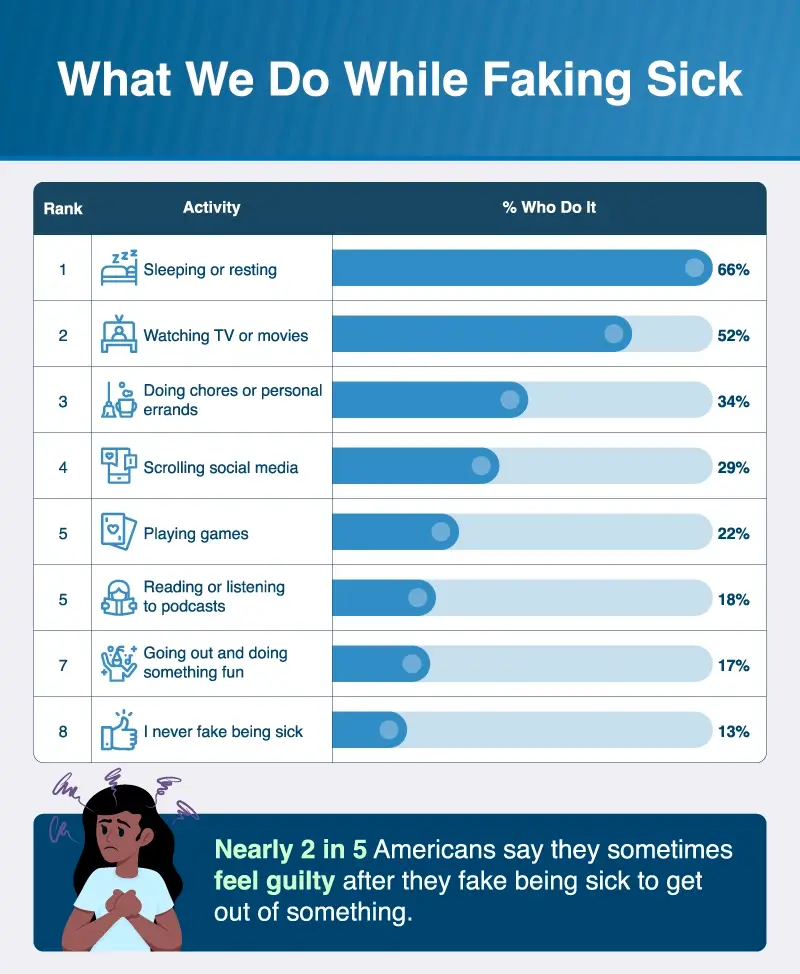
So once plans have been canceled, what are Americans doing with this new free time? We found the top activity respondents choose to do when pretending to be sick is sleeping or resting, which 66% of people report. From work to our daily responsibilities, sometimes we just need a little time to unwind. Lying down or even getting some extra sleep can not only help you to relax but also leave you feeling better rested to tackle the plans and items on your to-do list that are to come.
In second place for activities are watching TV or movies as more than half of respondents (52%) say this is how they spend their newly gained free time at home. Following behind in third place is a bit more productive task with more than a third of people saying they use this time to do chores and run personal errands.
For nearly 1 in 3 people this time is spent scrolling social media, while 22% report they play games, claiming the fourth and fifth most common activities, respectively. Rounding out the list of activities during fake sick time are reading or listening to podcasts reported by nearly 1 in 5 people, and going out and doing something fun, which 17% say they do.
These faked illnesses do not come without side effects, however, as we found nearly 2 in 5 Americans sometimes feel guilty after pretending to be sick to get out of something. Similarly, a third of people who fake being sick worry their friends will stop inviting them to do things.
Industries That Pretend Being Sick to Get Out of Work
After learning nearly half of Americans have faked being sick to get out of work, we wanted to find out which industries are most guilty of the white lie. Topping our ranking with 64% of workers admitting to it are those who work for the government.
This is followed by those in food services (63%) who felt calling in sick was the best way to get a short break from their job. In third place are those who work in retail (58%), followed by a tie for fourth place between the finance and insurance (57%) and construction (57%) industries.
When asked about the reasons for faking being sick to get out of work, the most common answer was the need for a break to recharge which 3 in 4 people reported. This is followed by 52% who say they simply didn’t feel like going in on that day.
The third most common reason, with 27% of people noting it, was the desire to have a day to themselves to stay home and watch TV. For nearly 1 in 6 people plans or a trip that was scheduled in advance are the reason for their faked illness.
Honest Rain Checks and Cozy Sudoku Nights
While a little white lie every now and then can be harmless, it’s important to keep others’ feelings in mind when using them. Although telling your friend you think you caught a cold rather than saying you just don’t feel like hanging out can seem easier, if done too frequently, it can have a negative impact on your relationships.
Sometimes what we’re really after isn’t an excuse, but rather a break. Being honest about a quiet night in for some time to yourself can feel uncomfortable at first, but it can also build more trust in the long run. For those nights, turn to Sudoku Bliss for a peaceful easy puzzle or turn up the difficulty and challenge yourself to an expert or even evil puzzle. After a night of calm gaming, you are sure to feel recharged and ready for your next outing.
Methodology
In this study, we set out to learn where Americans are most likely to fake being sick to get out of things. To do this, we surveyed residents in 40 of the largest U.S. cities and asked if they ever fake being sick, what events or activities they fake being sick to get out of, reasons they do it, and more. We then awarded points to responses that showed this behavior and calculated the average score by city. Finally, we adjusted those scores on a scale of 0 to 100, with 100 representing the most likely to fake being sick.