Killer Sudoku combinations are the possible sets of non-repeating numbers that fill a cage based on its size and total. Each cage, outlined in a dashed line, is defined by the number of cells it contains and the sum shown in the top left, which limits the number of valid combinations, sometimes to just one.
The objective of Killer Sudoku is to fill every row, column, and 3x3 block with the numbers 1 through 9 without repeats while also matching each cage total. Combinations connect these two sets of rules. By using them, you can narrow candidates, eliminate impossible numbers, determine which digits must appear in a cage, and solve puzzles much more efficiently when playing Sudoku online.
Download Killer Sudoku Combinations Cheat Sheet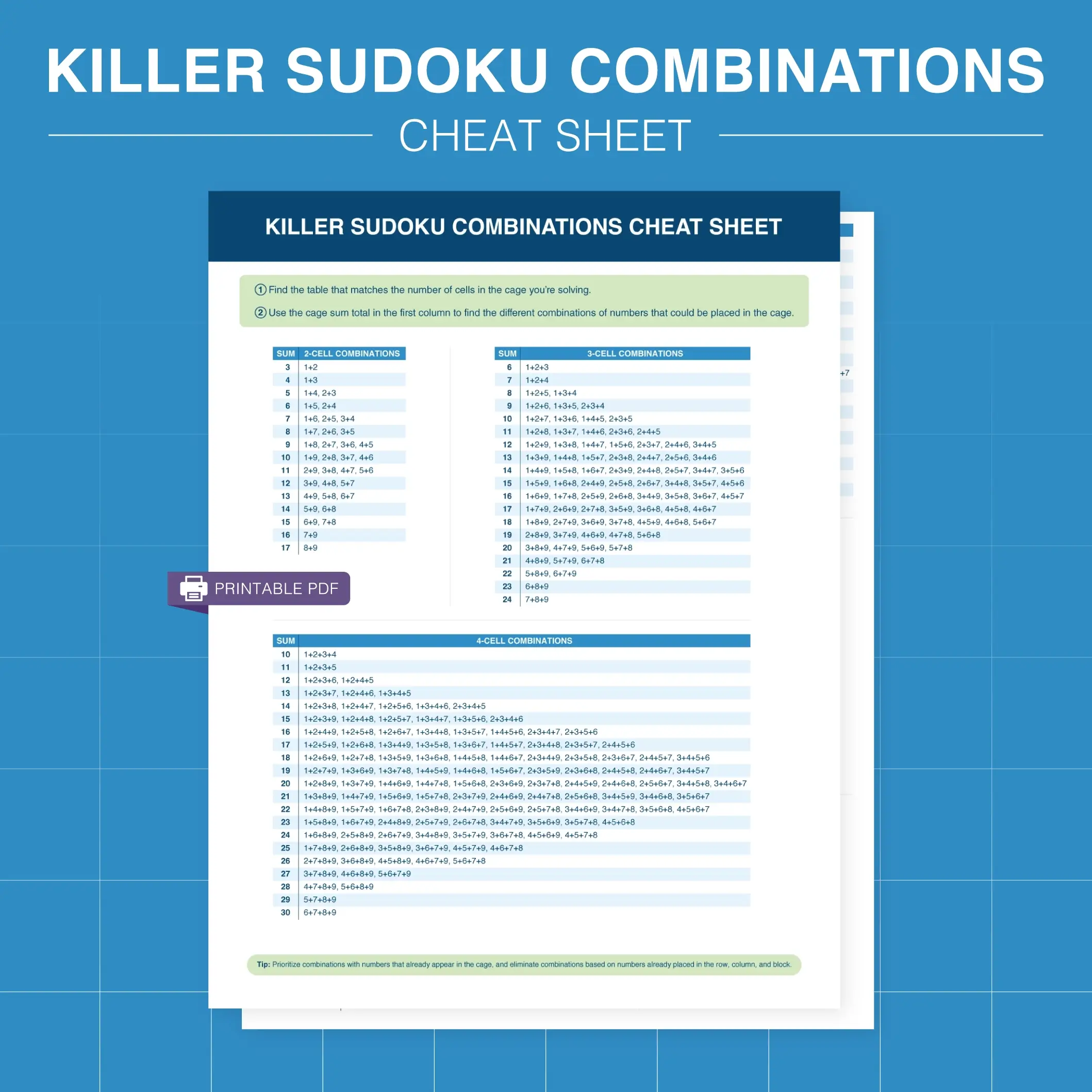
Killer Sudoku Cage Combinations
Cage combinations are determined by two things:
- The number of cells in the cage: For example, the cage in the top-left block includes two cells, the cage in the top-right block includes three cells, the cage in the bottom-left block includes four cells, and the cage in the middle-right block includes seven cells.
- The cage total: For example, the cage in the top-left block has a sum of 7, the cage in the top-right block has a sum of 15, the cage in the bottom-left block has a total of 14, and the 7-cell cage has a sum of 41.
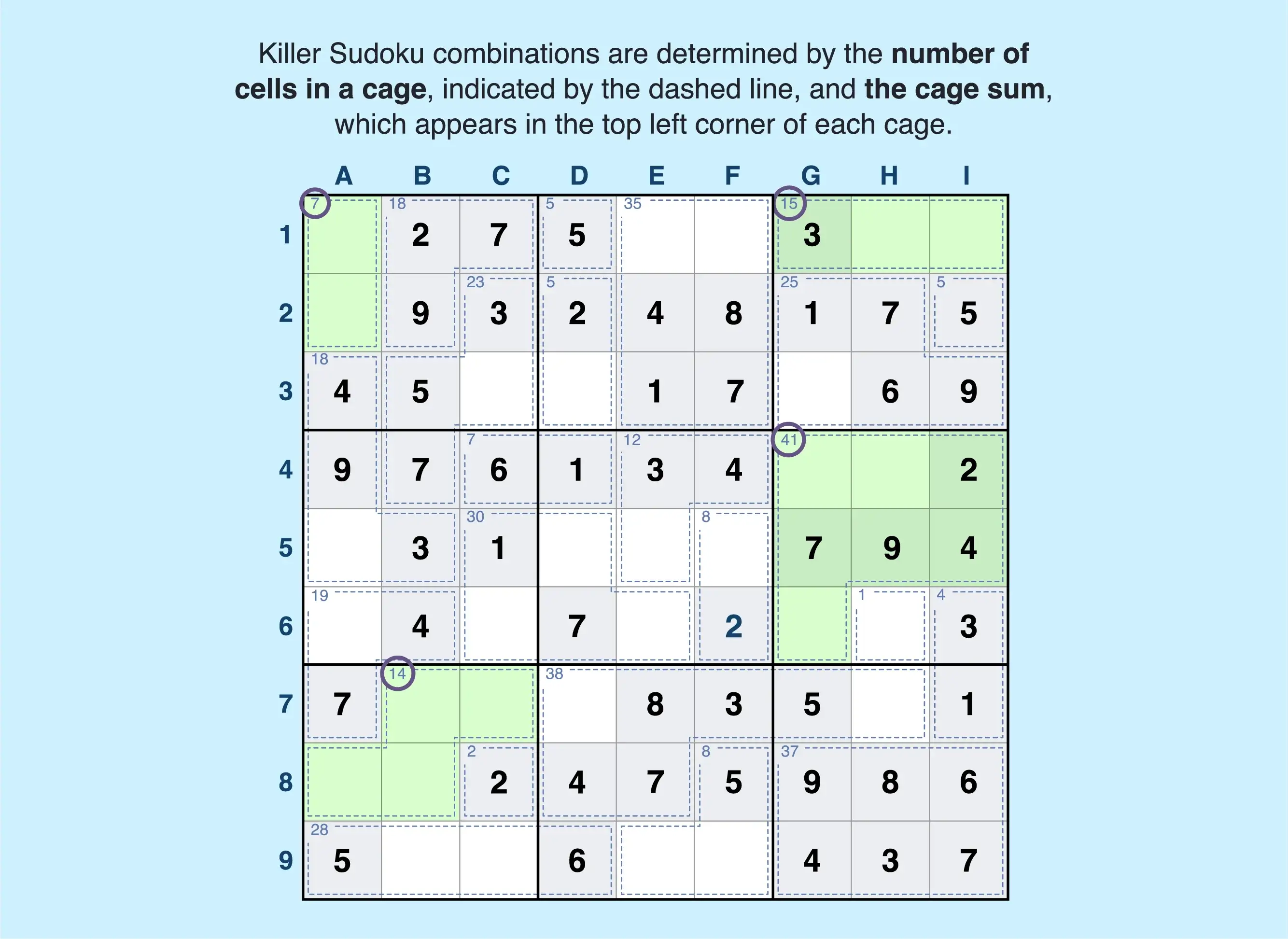
Because digits can’t repeat in rows, columns, blocks, or cages, each cage has a fixed set of possible combinations. To quickly access these combinations, the following sections are organized by the number of cells in a cage and offer tables breaking down possible combinations by cage totals.
2-Cell Cage Combinations
Two-cell cages are the most useful to recognize quickly. Many totals have only one or two possible combinations, and extreme sums often lead to immediate placements.
| Total | Combinations |
| 3 | 1+2 |
| 4 | 1+3 |
| 5 | 1+4, 2+3 |
| 6 | 1+5, 2+4 |
| 7 | 1+6, 2+5, 3+4 |
| 8 | 1+7, 2+6, 3+5 |
| 9 | 1+8, 2+7, 3+6, 4+5 |
| 10 | 1+9, 2+8, 3+7, 4+6 |
| 11 | 2+9, 3+8, 4+7, 5+6 |
| 12 | 3+9, 4+8, 5+7 |
| 13 | 4+9, 5+8, 6+7 |
| 14 | 5+9, 6+8 |
| 15 | 6+9, 7+8 |
| 16 | 7+9 |
| 17 | 8+9 |
3-Cell Cage Combinations
Three-cell cages introduce more possible combinations, but smaller and larger totals are still relatively constrained. These cages are often solved by combining combination knowledge with row, column, and block restrictions.
Tip: Three-cell cage combinations are mirrored around 15. Once you know the combinations that add up to less than 15, you can find the matching combinations for totals above 15 by replacing each digit (d) with (10 − d). For example, the combination 1 + 2 + 4 = 7 becomes 9 + 8 + 6 = 23. So, a total of 7 corresponds to a total of 23.
| Total | Combinations |
| 6 | 1+2+3 |
| 7 | 1+2+4 |
| 8 | 1+2+5, 1+3+4 |
| 9 | 1+2+6, 1+3+5, 2+3+4 |
| 10 | 1+2+7, 1+3+6, 1+4+5, 2+3+5 |
| 11 | 1+2+8, 1+3+7, 1+4+6, 2+3+6, 2+4+5 |
| 12 | 1+2+9, 1+3+8, 1+4+7, 1+5+6, 2+3+7, 2+4+6, 3+4+5 |
| 13 | 1+3+9, 1+4+8, 1+5+7, 2+3+8, 2+4+7, 2+5+6, 3+4+6 |
| 14 | 1+4+9, 1+5+8, 1+6+7, 2+3+9, 2+4+8, 2+5+7, 3+4+7, 3+5+6 |
| 15 | 1+5+9, 1+6+8, 2+4+9, 2+5+8, 2+6+7, 3+4+8, 3+5+7, 4+5+6 |
| 16 | 1+6+9, 1+7+8, 2+5+9, 2+6+8, 3+4+9, 3+5+8, 3+6+7, 4+5+7 |
| 17 | 1+7+9, 2+6+9, 2+7+8, 3+5+9, 3+6+8, 4+5+8, 4+6+7 |
| 18 | 1+8+9, 2+7+9, 3+6+9, 3+7+8, 4+5+9, 4+6+8, 5+6+7 |
| 19 | 2+8+9, 3+7+9, 4+6+9, 4+7+8, 5+6+8 |
| 20 | 3+8+9, 4+7+9, 5+6+9, 5+7+8 |
| 21 | 4+8+9, 5+7+9, 6+7+8 |
| 22 | 5+8+9, 6+7+9 |
| 23 | 6+8+9 |
| 24 | 7+8+9 |
4-Cell Cage Combinations
Four-cell cages appear frequently in Killer Sudoku puzzles. While they have more possible solutions, extreme totals still limit the combinations significantly and can help narrow candidates early.
Tip: Four-cell cage combinations are mirrored around 20. Once you know the combinations that add up to less than 20, you can find the matching combinations for totals above 20 by replacing each digit (d) with (10 − d). For example, 1 + 2 + 3 + 4 = 10 becomes 9 + 8 + 7 + 6 = 30, so a total of 10 corresponds to a total of 30.
| Total | Combinations |
| 10 | 1+2+3+4 |
| 11 | 1+2+3+5 |
| 12 | 1+2+3+6, 1+2+4+5 |
| 13 | 1+2+3+7, 1+2+4+6, 1+3+4+5 |
| 14 | 1+2+3+8, 1+2+4+7, 1+2+5+6, 1+3+4+6, 2+3+4+5 |
| 15 | 1+2+3+9, 1+2+4+8, 1+2+5+7, 1+3+4+7, 1+3+5+6, 2+3+4+6 |
| 16 | 1+2+4+9, 1+2+5+8, 1+2+6+7, 1+3+4+8, 1+3+5+7, 1+4+5+6, 2+3+4+7, 2+3+5+6 |
| 17 | 1+2+5+9, 1+2+6+8, 1+3+4+9, 1+3+5+8, 1+3+6+7, 1+4+5+7, 2+3+4+8, 2+3+5+7, 2+4+5+6 |
| 18 | 1+2+6+9, 1+2+7+8, 1+3+5+9, 1+3+6+8, 1+4+5+8, 1+4+6+7, 2+3+4+9, 2+3+5+8, 2+3+6+7, 2+4+5+7, 3+4+5+6 |
| 19 | 1+2+7+9, 1+3+6+9, 1+3+7+8, 1+4+5+9, 1+4+6+8, 1+5+6+7, 2+3+5+9, 2+3+6+8, 2+4+5+8, 2+4+6+7, 3+4+5+7 |
| 20 | 1+2+8+9, 1+3+7+9, 1+4+6+9, 1+4+7+8, 1+5+6+8, 2+3+6+9, 2+3+7+8, 2+4+5+9, 2+4+6+8, 2+5+6+7, 3+4+5+8, 3+4+6+7 |
| 21 | 1+3+8+9, 1+4+7+9, 1+5+6+9, 1+5+7+8, 2+3+7+9, 2+4+6+9, 2+4+7+8, 2+5+6+8, 3+4+5+9, 3+4+6+8, 3+5+6+7 |
| 22 | 1+4+8+9, 1+5+7+9, 1+6+7+8, 2+3+8+9, 2+4+7+9, 2+5+6+9, 2+5+7+8, 3+4+6+9, 3+4+7+8, 3+5+6+8, 4+5+6+7 |
| 23 | 1+5+8+9, 1+6+7+9, 2+4+8+9, 2+5+7+9, 2+6+7+8, 3+4+7+9, 3+5+6+9, 3+5+7+8, 4+5+6+8 |
| 24 | 1+6+8+9, 2+5+8+9, 2+6+7+9, 3+4+8+9, 3+5+7+9, 3+6+7+8, 4+5+6+9, 4+5+7+8 |
| 25 | 1+7+8+9, 2+6+8+9, 3+5+8+9, 3+6+7+9, 4+5+7+9, 4+6+7+8 |
| 26 | 2+7+8+9, 3+6+8+9, 4+5+8+9, 4+6+7+9, 5+6+7+8 |
| 27 | 3+7+8+9, 4+6+8+9, 5+6+7+9 |
| 28 | 4+7+8+9, 5+6+8+9 |
| 29 | 5+7+8+9 |
| 30 | 6+7+8+9 |
5-Cell Combinations
Five-cell cages and larger groups of cells have many possible combinations. In most cases, you’re better off solving these cages indirectly by focusing on smaller cages first to populate numbers in larger cages. The more numbers you add to larger cages, the easier it becomes to narrow down the possible combinations.
| Total | Combinations |
| 15 | 1+2+3+4+5 |
| 16 | 1+2+3+4+6 |
| 17 | 1+2+3+4+7, 1+2+3+5+6 |
| 18 | 1+2+3+4+8, 1+2+3+5+7, 1+2+4+5+6 |
| 19 | 1+2+3+4+9, 1+2+3+5+8, 1+2+3+6+7, 1+2+4+5+7, 1+3+4+5+6 |
| 20 | 1+2+3+5+9, 1+2+3+6+8, 1+2+4+5+8, 1+2+4+6+7, 1+3+4+5+7, 2+3+4+5+6 |
| 21 | 1+2+3+6+9, 1+2+3+7+8, 1+2+4+5+9, 1+2+4+6+8, 1+2+5+6+7, 1+3+4+5+8, 1+3+4+6+7, 2+3+4+5+7 |
| 22 | 1+2+3+7+9, 1+2+4+6+9, 1+2+4+7+8, 1+2+5+6+8, 1+3+4+5+9, 1+3+4+6+8, 1+3+5+6+7, 2+3+4+5+8, 2+3+4+6+7 |
| 23 | 1+2+3+8+9, 1+2+4+7+9, 1+2+5+6+9, 1+2+5+7+8, 1+3+4+6+9, 1+3+4+7+8, 1+3+5+6+8, 1+4+5+6+7, 2+3+4+5+9, 2+3+4+6+8, 2+3+5+6+7 |
| 24 | 1+2+4+8+9, 1+2+5+7+9, 1+2+6+7+8, 1+3+4+7+9, 1+3+5+6+9, 1+3+5+7+8, 1+4+5+6+8, 2+3+4+6+9, 2+3+4+7+8, 2+3+5+6+8, 2+4+5+6+7 |
| 25 | 1+2+5+8+9, 1+2+6+7+9, 1+3+4+8+9, 1+3+5+7+9, 1+3+6+7+8, 1+4+5+6+9, 1+4+5+7+8, 2+3+4+7+9, 2+3+5+6+9, 2+3+5+7+8, 2+4+5+6+8, 3+4+5+6+7 |
| 26 | 1+2+6+8+9, 1+3+5+8+9, 1+3+6+7+9, 1+4+5+7+9, 1+4+6+7+8, 2+3+4+8+9, 2+3+5+7+9, 2+3+6+7+8, 2+4+5+6+9, 2+4+5+7+8, 3+4+5+6+8 |
| 27 | 1+2+7+8+9, 1+3+6+8+9, 1+4+5+8+9, 1+4+6+7+9, 1+5+6+7+8, 2+3+5+8+9, 2+3+6+7+9, 2+4+5+7+9, 2+4+6+7+8, 3+4+5+6+9, 3+4+5+7+8 |
| 28 | 1+3+7+8+9, 1+4+6+8+9, 1+5+6+7+9, 2+3+6+8+9, 2+4+5+8+9, 2+4+6+7+9, 2+5+6+7+8, 3+4+5+7+9, 3+4+6+7+8 |
| 29 | 1+4+7+8+9, 1+5+6+8+9, 2+3+7+8+9, 2+4+6+8+9, 2+5+6+7+9, 3+4+5+8+9, 3+4+6+7+9, 3+5+6+7+8 |
| 30 | 1+5+7+8+9, 2+4+7+8+9, 2+5+6+8+9, 3+4+6+8+9, 3+5+6+7+9, 4+5+6+7+8 |
| 31 | 1+6+7+8+9, 2+5+7+8+9, 3+4+7+8+9, 3+5+6+8+9, 4+5+6+7+9 |
| 32 | 2+6+7+8+9, 3+5+7+8+9, 4+5+6+8+9 |
| 33 | 3+6+7+8+9, 4+5+7+8+9 |
| 34 | 4+6+7+8+9 |
| 35 | 5+6+7+8+9 |
6-Cell Combinations
| Total | Combinations |
| 21 | 1+2+3+4+5+6 |
| 22 | 1+2+3+4+5+7 |
| 23 | 1+2+3+4+5+8, 1+2+3+4+6+7 |
| 24 | 1+2+3+4+5+9, 1+2+3+4+6+8, 1+2+3+5+6+7 |
| 25 | 1+2+3+4+6+9, 1+2+3+4+7+8, 1+2+3+5+6+8, 1+2+4+5+6+7 |
| 26 | 1+2+3+4+7+9, 1+2+3+5+6+9, 1+2+3+5+7+8, 1+2+4+5+6+8, 1+3+4+5+6+7 |
| 27 | 1+2+3+4+8+9, 1+2+3+5+7+9, 1+2+3+6+7+8, 1+2+4+5+6+9, 1+2+4+5+7+8, 1+3+4+5+6+8, 2+3+4+5+6+7 |
| 28 | 1+2+3+5+8+9, 1+2+3+6+7+9, 1+2+4+5+7+9, 1+2+4+6+7+8, 1+3+4+5+6+9, 1+3+4+5+7+8, 2+3+4+5+6+8 |
| 29 | 1+2+3+6+8+9, 1+2+4+5+8+9, 1+2+4+6+7+9, 1+2+5+6+7+8, 1+3+4+5+7+9, 1+3+4+6+7+8, 2+3+4+5+6+9, 2+3+4+5+7+8 |
| 30 | 1+2+3+7+8+9, 1+2+4+6+8+9, 1+2+5+6+7+9, 1+3+4+5+8+9, 1+3+4+6+7+9, 1+3+5+6+7+8, 2+3+4+5+7+9, 2+3+4+6+7+8 |
| 31 | 1+2+4+7+8+9, 1+2+5+6+8+9, 1+3+4+6+8+9, 1+3+5+6+7+9, 1+4+5+6+7+8, 2+3+4+5+8+9, 2+3+4+6+7+9, 2+3+5+6+7+8 |
| 32 | 1+2+5+7+8+9, 1+3+4+7+8+9, 1+3+5+6+8+9, 1+4+5+6+7+9, 2+3+4+6+8+9, 2+3+5+6+7+9, 2+4+5+6+7+8 |
| 33 | 1+2+6+7+8+9, 1+3+5+7+8+9, 1+4+5+6+8+9, 2+3+4+7+8+9, 2+3+5+6+8+9, 2+4+5+6+7+9, 3+4+5+6+7+8 |
| 34 | 1+3+6+7+8+9, 1+4+5+7+8+9, 2+3+5+7+8+9, 2+4+5+6+8+9, 3+4+5+6+7+9 |
| 35 | 1+4+6+7+8+9, 2+3+6+7+8+9, 2+4+5+7+8+9, 3+4+5+6+8+9 |
| 36 | 1+5+6+7+8+9, 2+4+6+7+8+9, 3+4+5+7+8+9 |
| 37 | 2+5+6+7+8+9, 3+4+6+7+8+9 |
| 38 | 3+5+6+7+8+9 |
| 39 | 4+5+6+7+8+9 |
7-Cell Combinations
| Total | Combinations |
| 28 | 1+2+3+4+5+6+7 |
| 29 | 1+2+3+4+5+6+8 |
| 30 | 1+2+3+4+5+6+9, 1+2+3+4+5+7+8 |
| 31 | 1+2+3+4+5+7+9, 1+2+3+4+6+7+8 |
| 32 | 1+2+3+4+5+8+9, 1+2+3+4+6+7+9, 1+2+3+5+6+7+8 |
| 33 | 1+2+3+4+6+8+9, 1+2+3+5+6+7+9, 1+2+4+5+6+7+8 |
| 34 | 1+2+3+4+7+8+9, 1+2+3+5+6+8+9, 1+2+4+5+6+7+9, 1+3+4+5+6+7+8 |
| 35 | 1+2+3+5+7+8+9, 1+2+4+5+6+8+9, 1+3+4+5+6+7+9, 2+3+4+5+6+7+8 |
| 36 | 1+2+3+6+7+8+9, 1+2+4+5+7+8+9, 1+3+4+5+6+8+9, 2+3+4+5+6+7+9 |
| 37 | 1+2+4+6+7+8+9, 1+3+4+5+7+8+9, 2+3+4+5+6+8+9 |
| 38 | 1+2+5+6+7+8+9, 1+3+4+6+7+8+9, 2+3+4+5+7+8+9 |
| 39 | 1+3+5+6+7+8+9, 2+3+4+6+7+8+9 |
| 40 | 1+4+5+6+7+8+9, 2+3+5+6+7+8+9 |
| 41 | 2+4+5+6+7+8+9 |
| 42 | 3+4+5+6+7+8+9 |
8-Cell Combinations
| Total | Combination |
| 36 | 1+2+3+4+5+6+7+8 |
| 37 | 1+2+3+4+5+6+7+9 |
| 38 | 1+2+3+4+5+6+8+9 |
| 39 | 1+2+3+4+5+7+8+9 |
| 40 | 1+2+3+4+6+7+8+9 |
| 41 | 1+2+3+5+6+7+8+9 |
| 42 | 1+2+4+5+6+7+8+9 |
| 43 | 1+3+4+5+6+7+8+9 |
| 44 | 2+3+4+5+6+7+8+9 |
Examples of Solving Killer Sudoku with Cage Combinations
Killer Sudoku combinations are most useful when you apply them to eliminate candidates and narrow down possibilities within a cage. Instead of trying to place numbers immediately, use combinations to determine what can and cannot fit.
2-Cell Cage Combination Solving Example
The most common 2-cell cages to recognize are extreme totals. A total of 3 (1+2) or 17 (8+9) has only one possible combination, which makes these cages quick starting points.
Follow these steps to solve 2-cell cages:
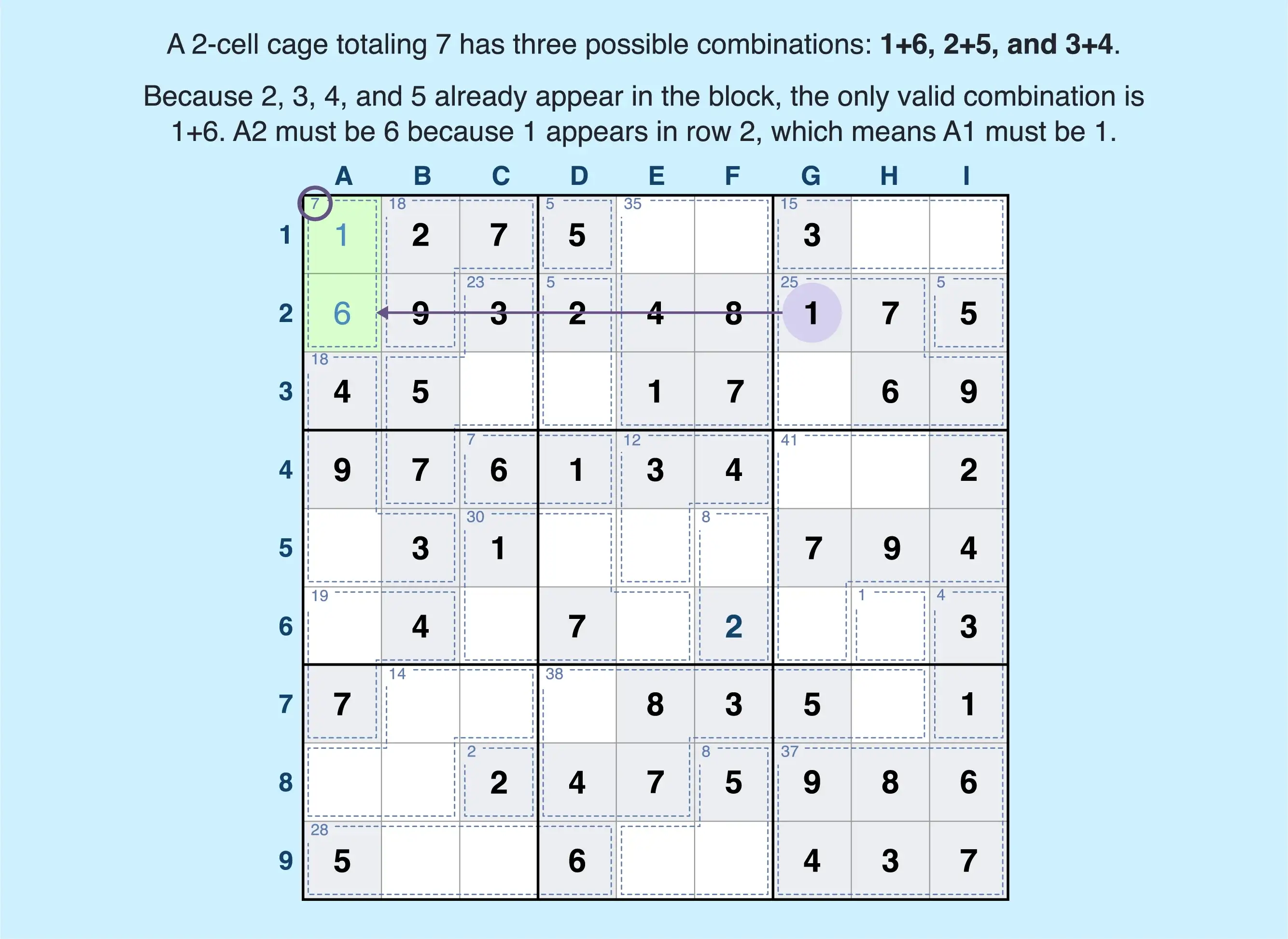
- List the possible combinations and narrow it for existing answers in the cage. For example, a 2-cell cage totaling 7 has three possible combinations, and because this cage has no candidate placed already, all combinations are valid:
- 1+6
- 2+5
- 3+4
- Eliminate digits based on overlapping units. Evaluate the candidates for each cell using row, column, and block constraints.
- A1 can’t be 2, 3, or 5 because those numbers already appear in row 1. This eliminates the combination 2+5.
- A1 also cannot be 3 because it appears in the row or 4 because it already appears in the column, which eliminates 3+4.
- A2 must be 6 because it is the last unsolved block in row 2, so A1 must be 1, solving the cage.
3-Cell Cage Combination Solving Example
For 3-cell cages, smaller totals like 6 (1+2+3) and larger totals near 24 have fewer combinations and are easier to solve early. Mid-range totals have more possible solutions and usually require elimination from surrounding units.
Follow these steps to solve 3-cell cages:
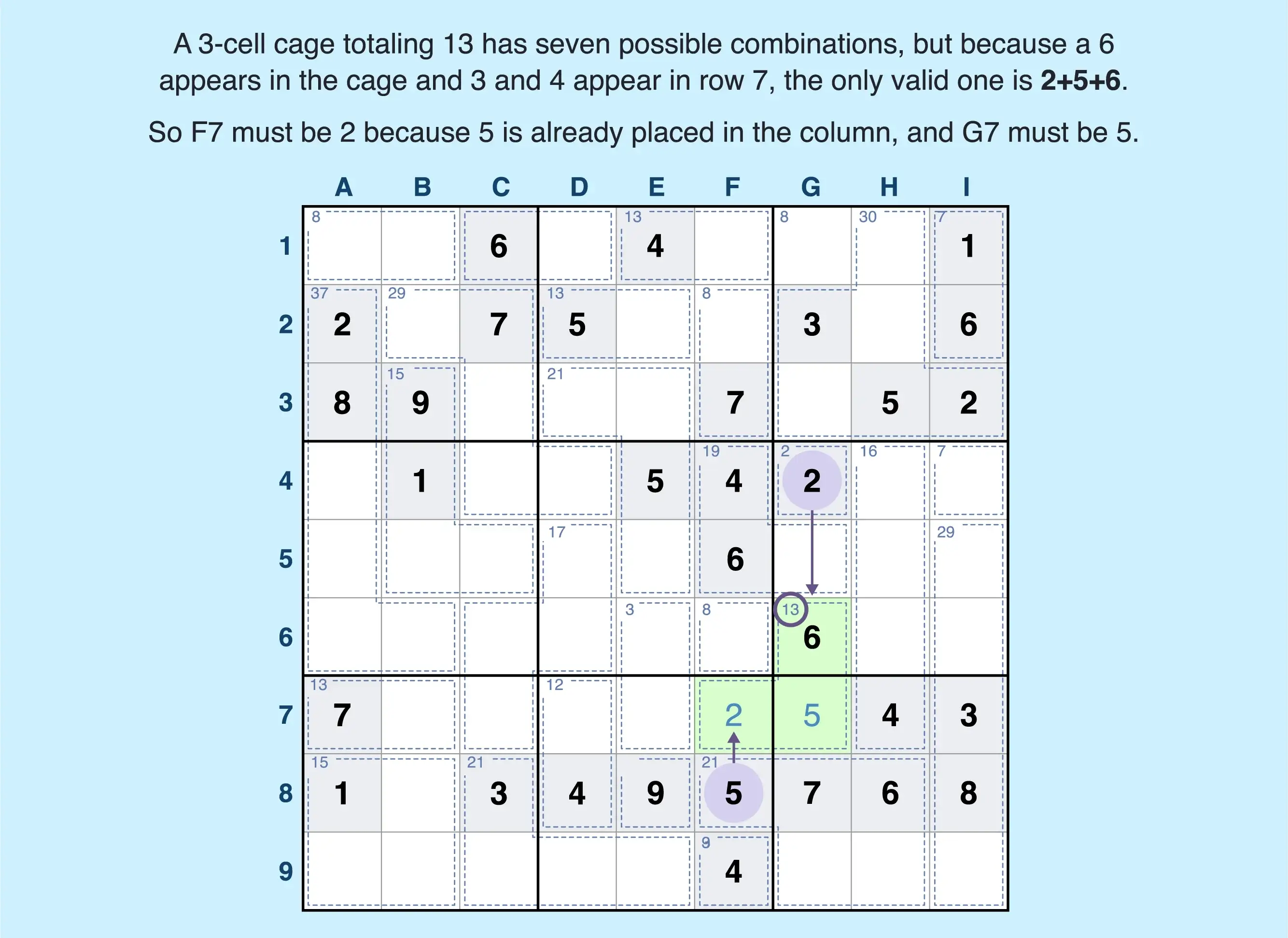
- List the possible combinations and narrow them down based on existing answers in the cage. For example, a 3-cell cage totaling 13 has seven possible combinations, and because this cage has a 6 placed already, only two combinations are valid:
- 2+5+6
- 3+4+6
- Eliminate digits based on answers in overlapping units. Evaluate the candidates for each cell using row, column, and block constraints.
- G7 can’t be 3 or 4 because those numbers already appear in row 7 and column G. This eliminates the combination 3+4+6, leaving 2+5+6 as the only possible combination.
- G7 must be 5 because 2 already appears in the column, and F7 must be 2 because 5 appears in the column and it’s the last cell left in the cage.
4-Cell Cage Combination Solving Example
Some 4-cell cages, like 10 (1+2+3+4) or 30 (6+7+8+9), only have one possible combination, which makes them helpful for quickly narrowing down candidates. Still, it’s often easier to solve them after filling in other cells or smaller cages first so that you can check the cage combinations against overlapping rows, columns, and blocks.
Follow these steps to solve 4-cell cages:
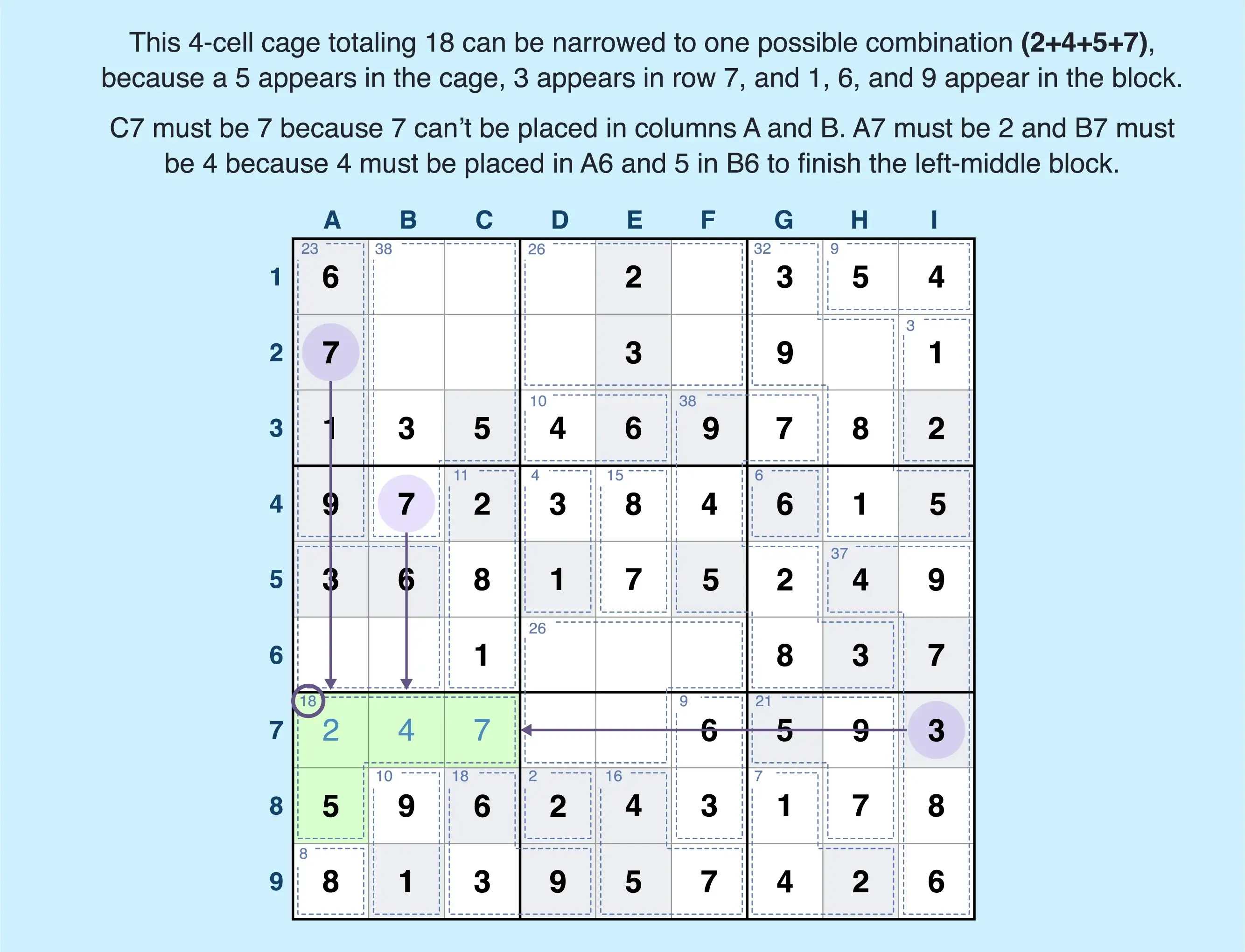
- List the possible combinations and narrow it for existing candidates in the cage. For example, a 4-cell cage totaling 18 has 11 possible combinations, and because A8 is already 5, 5 combinations are valid:
- 1+3+5+9
- 1+4+5+8
- 2+3+5+8
- 2+4+5+7
- 3+4+5+6
- Eliminate digits based on overlapping units. Evaluate the candidates for each cell using row, column, and block constraints. When an entire cage falls in one block, looking at the block first helps to eliminate entire combinations.
- None of the cells can be 1, 6, or 9 because they already exist in the block, so all but two combinations remain (2+3+5+8 or 2+4+5+7)
- Because the three open cells all reside in row 7, no combination can contain a 3 because it’s already in that row, so 2+4+5+7 is the only valid combination.
- C7 must be 7 because it already appears in columns A and B, so A7 and B7 cannot be 7, which means that both A7 and B7 must be either 2 or 4.
- Narrow down the possibilities and place digits. The block above the cage is missing just two numbers, 4 and 5, and those numbers must be placed in the same columns (A and B) as the empty cage cells. Because column A already has a 5, then A6 will have to be 4, which means A7 must be 2 and B7 must be 4, solving the cage.
5-Cell Combination Solving Example
Similar to 4-cell cages, when you’re solving a 5-cell cage or larger, you should first focus on getting as many smaller cages solved first. Then you give yourself a lot more placements that can act as restraints for cages that span multiple blocks, rows, and/or columns.
Follow these steps to solve for a 5-cell cage:
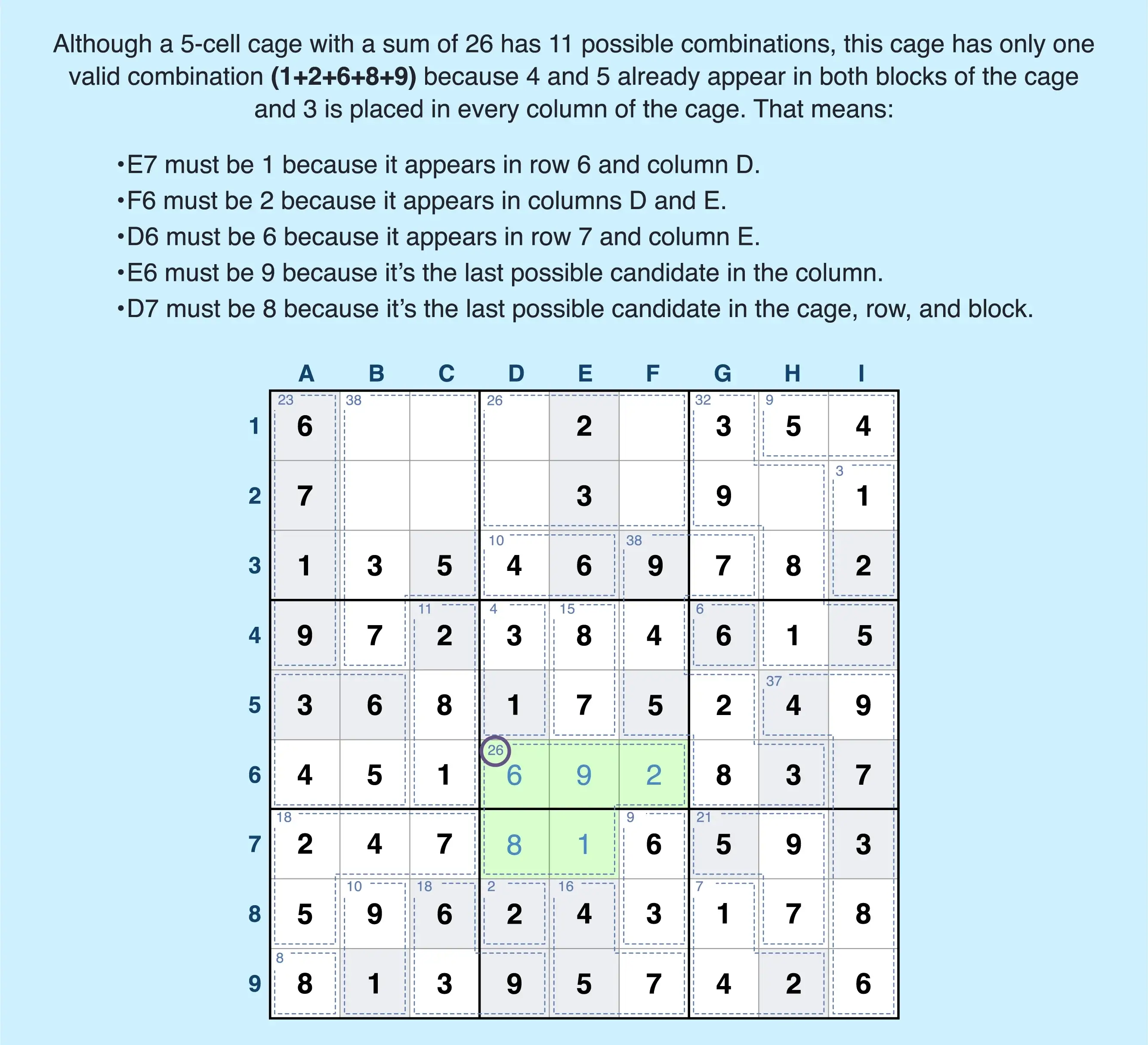
- List the possible combinations and narrow it for existing candidates in the cage. For example, a 5-cell cage with a sum of 26 has 11 possible combinations, which you can find in the table above.
- Eliminate digits based on overlapping units. Evaluate the candidates for each cell using row, column, and block constraints. Often looking at the blocks first can help narrow down possibilities.
- Because 4 and 5 already appear in both blocks in which the cage is placed and 3 is placed in every column that overlaps the cage, the only valid combination is 1+2+6+8+9.
- E7 must be 1 because it appears in row 6 and column D.
- F6 must be 2 because it appears in columns D and E.
- D6 must be 6 because it appears in row 7 and column E.
- E6 must be 9 because it’s the last possible candidate for that column, and then D7 must be 8 because it’s the last digit in the cage, row, and block.
Whether you’re a beginner or advanced solver, using cage combinations can be a powerful tool to quickly narrow down possibilities and place candidates. Cage combinations tend to be the key to solving hard Killer Sudoku puzzles as well as expert and evil ones quickly.